
In the wake of Jesse Jackson’s passing on February 17, 2026, I began reflecting on the enduring legacies of those who shaped the fight for civil rights, equality, and social justice, especially during Black History Month. Jackson’s leadership, advocacy, and influence over decades mirror the impact of other key figures in the movement, including Carter G. Woodson, the father of Black History Month, whose work continues to challenge our understanding of education and empowerment. These figures have shaped the world we live in today. And when I think about their enduring impact, I’m also reminded of the contributions of my own grandfather, Herbert Anderson Sr., whose work in education and civil rights was transformative in his own right.
The Legacy of Jesse Jackson
I was grateful enough to have grown up, despite being in the south, learning Black History in public school K-12. Notably, teachers would consistently recycle more popular figures, like Martin Luther King, throughout Black History month; However, Jesse Jackson was also a notable figure himself. Jesse Jackson was a giant in the struggle for racial justice. A minister, activist, and politician, his efforts in the Civil Rights Movement are widely recognized for their influence in the fight against systemic oppression and inequality. Jackson’s vision of a more just world was one where the marginalized would not only be seen but also heard. His leadership, much like that of others in the movement, was not without its challenges and sacrifices. It was his courage, however, that made his impact so unforgettable. We continue to celebrate his life, understanding the ripple effect of his tireless efforts.
Carter G. Woodson’s Mis-Education of the Negro
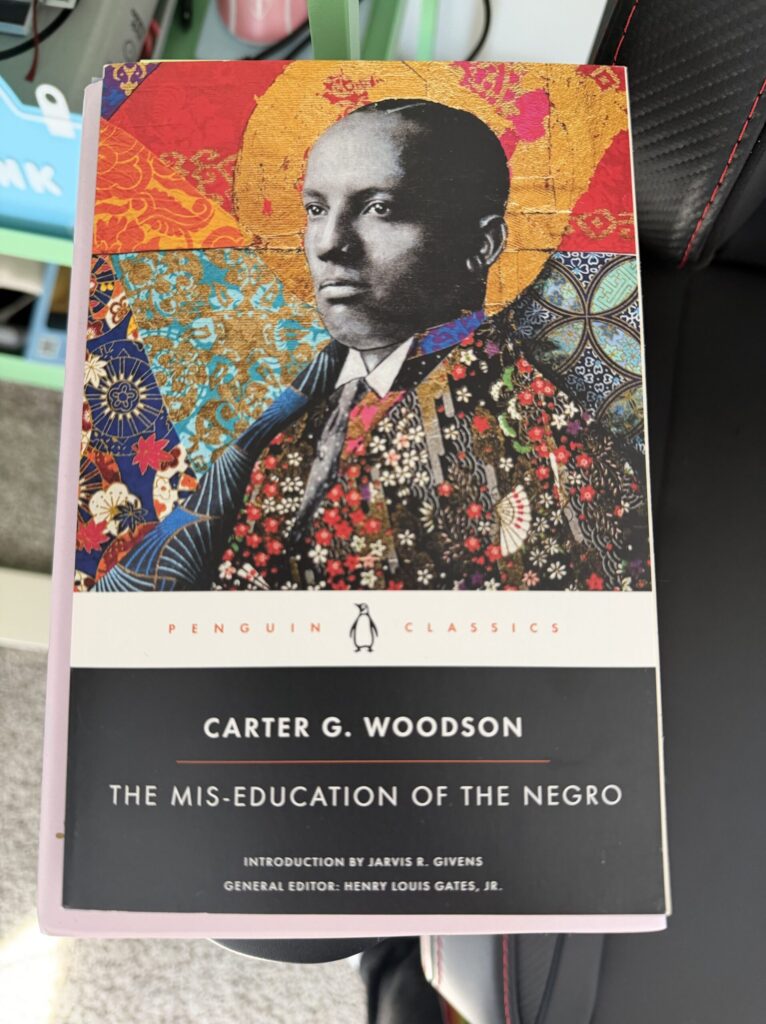
During Valentine’s Day this year, my partner and I went to the Avalon to grab some dinner, and stopped by the bookstore to engage in our typical tradition: browsing what’s new and me buying more books (and stickers). I came across a table in the front of the store books laid out for quicker viewing and consumption of notable works for Black History Month. Some I was not happy with the choice based on the person being more controversial, though some like the book “The Mis-Education of the Negro” caught my eye. Woodson’s “The Mis-Education of the Negro” remains one of the most important works in the history of Black literature and education. Woodson, as a scholar and activist, used his academic rigor to question the education system and its ability to truly serve the needs of Black people. His assertion that the educational system misrepresents the history and contributions of Black Americans is still relevant today. Just as Woodson fought against the marginalization of Black intellectualism, Jackson’s activism and Woodson’s work together show how history and education shape our path forward.
My Grandfather’s Legacy

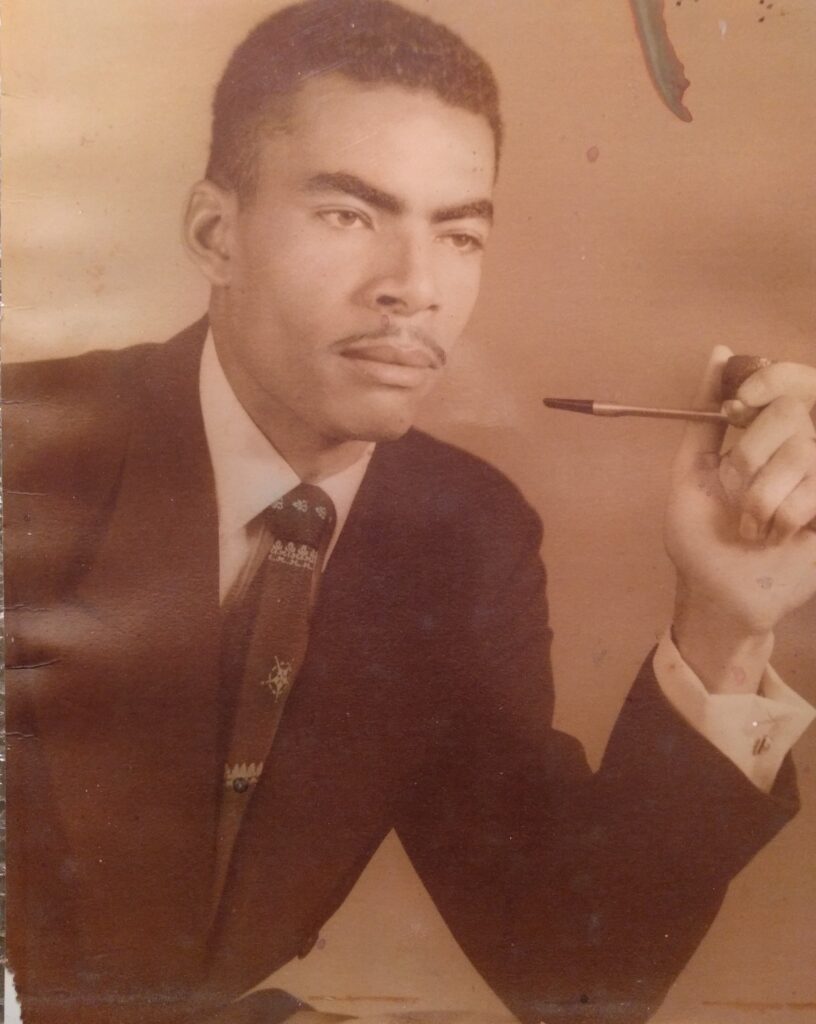
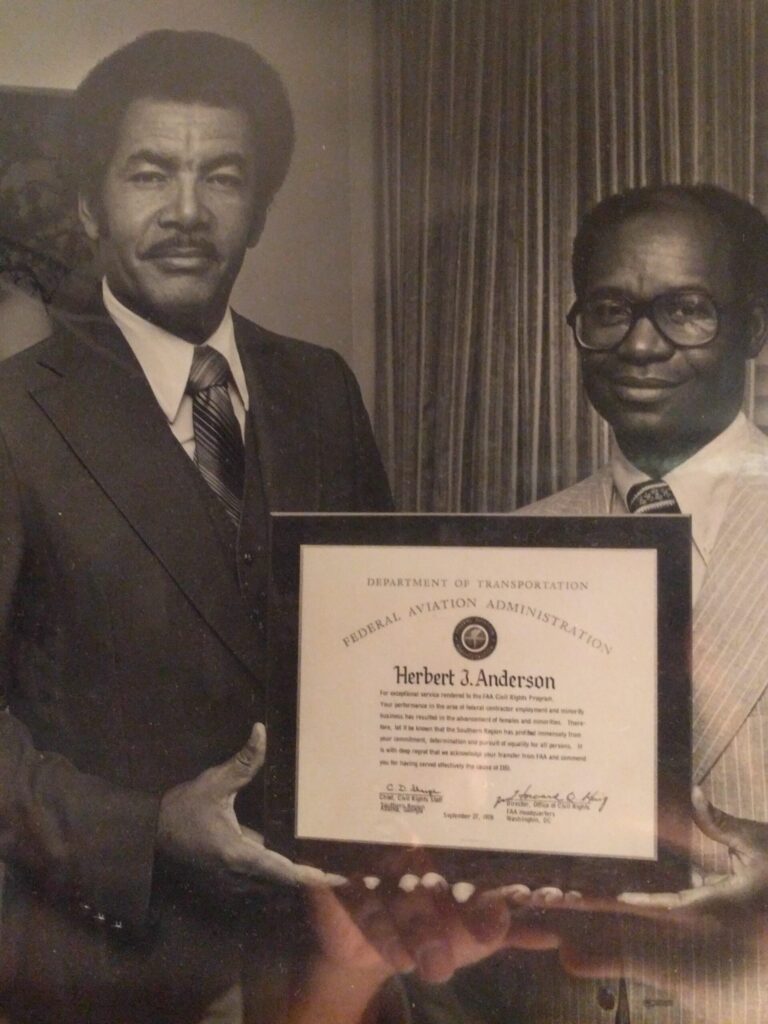

In the context of my family, my grandfather, Herbert Anderson Sr., was a trailblazer in his own right. His accomplishments are profound and reflect the unwavering dedication he had to education, civil rights, and community leadership.
- He integrated LSU‑Baton Rouge in 1955, following Brown v. Board of Education, amidst an intense and often violent climate of resistance. As part of his involvement, he also survived an assassination attempt, carrying bullet wounds in his body, specifically in his skull, for the rest of his life.
- He served as a Civil Rights Specialist for the Federal Aviation Administration, ensuring that the federal government met its mandates for equal opportunity and fair treatment of Black Americans in the aviation industry. This was a pivotal role, bridging education with policy and governance at the national level.
- He was active in the NAACP, Boy Scouts (Master), Prince Hall Free, and Accepted Masons (Freemason), providing leadership on local school boards and civic institutions. He advocated for the peaceful desegregation of schools in St. Tammany Parish during the 1960s.
- His direct contributions helped integrate schools within St. Tammany Parish, marking a major step forward for civil rights on a local level.
Herbert Anderson Sr.’s influence extended beyond education. His leadership shaped the fabric of the community, as he fought tirelessly for integration and social justice in the face of entrenched resistance. He exemplified the kind of quiet, steadfast leadership that was necessary for progress during the civil rights struggle. His contributions were not only felt in the classroom, but also in the institutions that governed and influenced the lives of countless individuals in his community. I am proud to say that I am part of his family and his grandchild. It was impacted me with my own journey in education, leadership, and also championing for our people.
Leave a Reply
You must be logged in to post a comment.