Everyone talks about the bad days.
The ones where you can’t get out of bed. Where a text message sends you into a spiral. Where your body decides that today, for no discernible reason, is the day to remember *everything* at once. Those days get talked about. Written about. Validated.
However, nobody talks about the good days… which are their own kind of complicated to be honest.
What Is CPTSD?
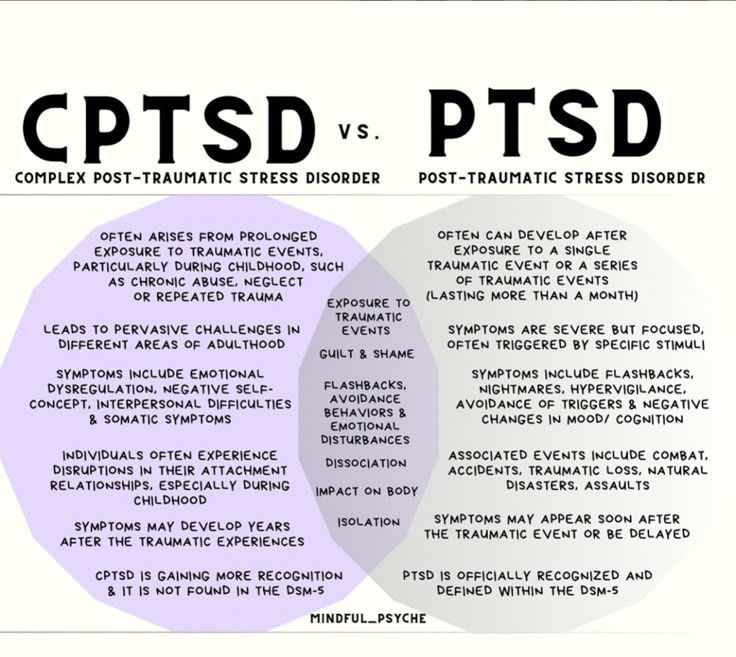
For those unfamiliar: Complex Post-Traumatic Stress Disorder (CPTSD) is different from the PTSD most people picture. It’s not one event. It’s what happens when trauma is prolonged, repeated, and often relational; this means it came from the people who were supposed to keep you safe. Childhood neglect. Emotional abuse. Being the family scapegoat. Growing up having to manage other people’s emotions just to survive your own home.
A core dilemma of CPTSD is that your longing for connection conflicts with memories that tell you relationships aren’t safe, and it can be a challenge to develop healthy relationships (Schwartz, 2016, p. 45).
Interestingly, research in the psychological and medical fields are now recognizing, under the ACE (Adverse Childhood Experiences) study, the harms that children exposed to trauma may indeed have physical health risks later on in life (Schwartz, 2017, p. 37). Experiences of childhood trauma include (I’ve placed ✅ next to the ones that apply to me):
- Physical Abuse ✅
- Verbal Abuse ✅
- Sexual Abuse
- Physical or Emotional Neglect ✅
- Exposure To Domestic Violence ✅
- Exposure To Household Members Who Were Substance Abusers ✅
- Exposure To Household Members Who Were Mentally Ill, Suicidal ✅ , or Imprisoned
They concluded that adults who had been exposed to four ACE factors as children are 4 times more likely to become depressed, 7 times more likely to use substances, and 12 times more likely to attempt suicide than adults with an ACE score of zero (Schwartz, 2017, p. 37).
Before I had language for any of this, it began early at the age of 5 seeing my father beat up my mother in the back of the garage. Growing up in an environment where I wasn’t fully wanted, where violence existed and was excused, where I learned to read rooms before I learned to read books. I was molded into being the fixer, the caretaker, and the one who absorbed everything and was expected to be grateful for the privilege by two emotionally immature (likely narcissistic) parents.
The body keeps the score, the tally, the history. Trauma alters your way of life, how you live your life, even if you live a life that feels like your own.
CPTSD rewires you: brain and soul. For a long time, your nervous system learns to stay on high alert, because staying on high alert was the only way to stay safe. Even when the danger is gone, your body doesn’t always get the memo.
It shows up as:
- Hypervigilance
- Emotional flashbacks
- Nightmares about people you’ve tried to heal from
- Dissociation when you’re doing too much or surviving in too small a space
- Imposter syndrome that makes you feel like everything you know and everything you’ve earned still isn’t good enough
- Social, emotional, and sometimes cognitive impairments that flare up when microaggressions hit you at work, or when people you trusted give you vague confirmations of support instead of the real thing
I used to get sick easily as a kid, which believe was caused by my environment. My mind and body still work overtime sometimes, causing a fog I’ve had to learn to name instead of push through.
And then sometimes… you have a good day 🌻
Do You Know Where You Land?
Before I go further, if you’ve ever wondered whether you might have CPTSD, there’s a tool worth knowing about below.
The International Trauma Questionnaire (ITQ) is a free, research-validated self-assessment developed by trauma researchers and recognized by the World Health Organization. It’s short with 18 questions, and it looks at both the core PTSD symptoms and the additional layer that makes it Complex: affective dysregulation, negative self-concept, and disturbances in relationships. This was not something I directly came across while doing my Masters of Science in Psychology, but rather a continued research working on myself.
I took it myself, as part of working through The Complex PTSD Workbook. Seeing every single criterion reflected back at me, in clinical language and on paper, was both clarifying and heavy. There’s something about having a name for it, and having a framework. It doesn’t fix anything. But it does make the chaos feel less like a character flaw and more like a response to things that actually happened.
You can download the official PDF (in any language) at the International Trauma Questionnaire (ITQ) website, or take an interactive version online on the embrace autism website located here.
Please note: this is a self-report tool, not a clinical diagnosis. If your results feel significant, I’d encourage you to bring them to a therapist who specializes in trauma.
What a Good Day Actually Feels Like
A good day with CPTSD doesn’t look like the absence of symptoms (even though that would be wonderful)l.
It looks like noticing the symptoms, and not being swallowed whole by them.
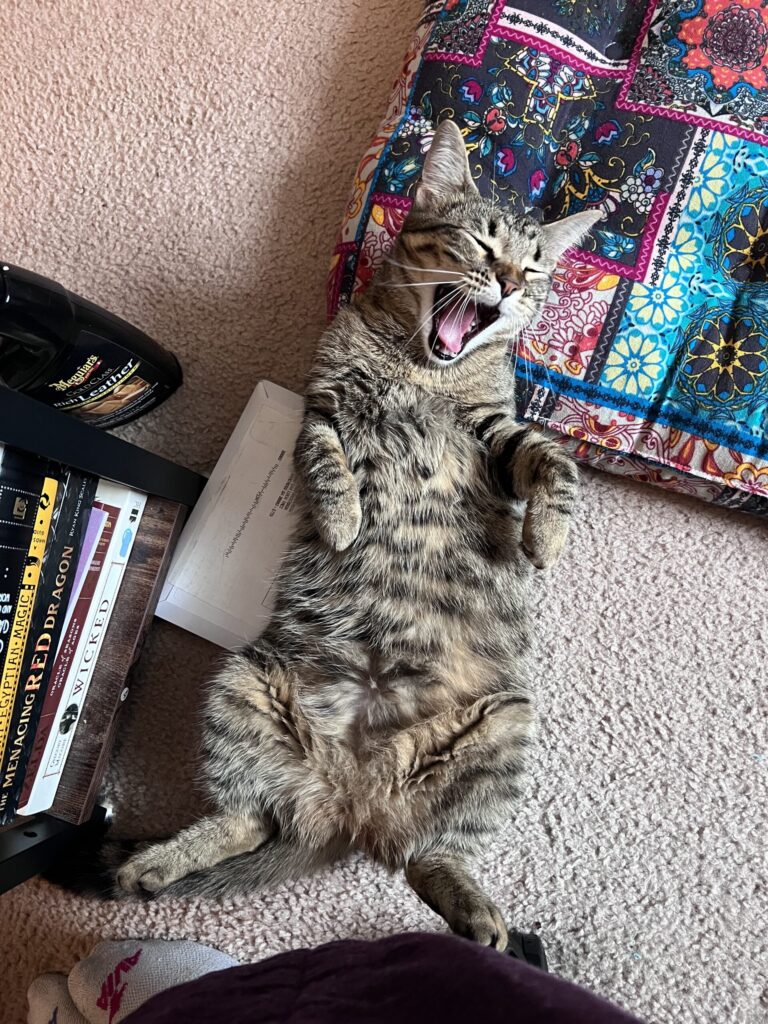

It looks like waking up and lying there for a minute without dread crawling in first. Maybe Salem (one of my cats, but the one that is bonded to me AND also has CPTSD) curled up at my side, warm and unbothered. The house quiet in a way that feels safe instead of suffocating or concerning. Leading with a structured agenda of some kind for the day, and continuous planning throughout the week, month, and maybe even year.
It also looks like making coffee and not catastrophizing while I wait for it to brew. So when I take a sip, it feels like warmth and comfort than panic and anxiety.
Sometimes that’s the miracle. Just… making coffee and having comfort in a mug ☕️
As a Project Manager, I am grateful I have the skills, autonomy, and ability to manage the chaos of both my professional and personal life. A structured schedule, agenda, and routine (sometimes) makes all the difference for me as someone who has CPTSD. Sometimes I like to be spontaneous, but under structured coordination where I feel safe. I HATE LAST MINUTE THINGS. If it wasn’t planned at least a week in advance and it’s not on a calendar? It’s not happening. And my nervous system is not accommodating.
The Guilt That Comes With It
Good days can feel suspicious.
When you’ve spent years in survival mode, peace starts to feel like a trap. Like something you have to pay for later. Like the other shoe is always about to drop.
I catch myself waiting for it to fall apart. Bracing and scanning the room, metaphorically and sometimes literally, for the thing that’s going to ruin it. I spook myself sometimes. The hypervigilance runs so deep that I once genuinely thought something was wrong with my mind, not understanding yet that what I was experiencing had a name and reason. It wasn’t my fault…
That hypervigilance doesn’t disappear on a good day. It just… loosens its grip a little. And in that loosening, there’s sometimes guilt. “Why do I get to feel okay today? What did I do to earn this?”
The answer, I’m learning, is nothing. I don’t have to earn rest and peace; I don’t have to earn a good day.
But my nervous system hasn’t always fully gotten that memo.
The Dissociation Nobody Talks About
On the really hard days, like the ones where I’m steamrolled at work, or treated like I’m invisible by people who call themselves friends… or even hit with one too many microaggressions, I disappear into myself. Not dramatically, but quietly. I won’t matter; only the goal, the person, the task at hand. I exist to serve whatever is in front of me and nothing more. It’s a survival pattern I learned young. Keep the peace. Repress. Deny that the people I care about are hurting me until the evidence is undeniable.
Dissociation was never something “happening to me.” It was something I did to keep myself intact when falling apart wasn’t an option. Like when I had to dissociate for my grandmother when taking care of her because she needs my help, but can’t help me in her condition against my mother. Or even dissociating to help take care of my uncle with Schizophrenia, because he needs help getting to his appointments and receive his medication and the help he deserves. All the while going back home to where it all began…
A good day is when I catch it before I disappear. When I notice I’m starting to check out and I can say, out loud, or just to myself, “I’m here. I’m okay. This is now, not then.”
That’s enormous. That’s everything.
What Healing Actually Looks Like in Practice
On a good day, I can:
- Receive a compliment without immediately waiting for the punchline
- Disagree with someone and not feel like I’m about to be abandoned
- Sit in silence without filling it with apologies
- Let my partner love me without flinching, and mean it when I say “I’m okay”
These sound small, but they are enormous.
Because CPTSD, especially when it comes from family and from the people whose job was to love you, teaches you that love is conditional, that safety is temporary. That who you are is always one wrong move away from being too much or not enough.
Working through my CPTSD workbook with my partner has felt like therapy in itself. We didn’t fully know how deep this went for either of us. Applying language to my condition has been the most impactful and rewarding part, even when it exposes the ugly and the darkness I’ve lived in and through. It has even opened up my partner’s eyes to the fact that CPTSD may be worth looking into too.
A good day is when I can be Kris fully, quietly, without performance, and not feel like I’m about to be punished for it.
Still Here And Healing
I’m not cured, and I’m not “better” in the way movies want you to be better. Healing from CPTSD is slower than that. Messier. More circular. You think you’ve processed something and then a song plays, or a family member calls, and suddenly you’re right back in the feeling, even if you’re not back in the moment. Sometimes it can even come in the form of realizing how bad a friend really is and not breaking the relationship because it’s too familiar or “comfortable”, triggering your nervous system and thinking “it’s nothing”… because you think you’re nothing.
But you are something; you are someone! The good days are proof that something is shifting. They’re proof that all the therapy, the boundary-setting, the grey rocking, the chosen family-building, the naming and renaming of what happened to me is doing something.
A good day is not the finish line. It’s evidence that the finish line exists.
And on the days when I can make my coffee, feel the sun, sit next to the person I love, and just be, without bracing, without shrinking, without waiting for it to be taken away… That’s enough.
That is more than enough ❤️🩹
APA Citation:
Schwartz, A. (2016). The Complex PTSD workbook: A mind-body approach to regaining emotional control and becoming whole. Callisto Publishing.
Discover more from Kris In Thought
Subscribe to get the latest posts sent to your email.
[…] you’ve read my post on What CPTSD Looks Like on a Good Day, you already know that I believe in naming things that matter. Having a framework or a language for […]